
As an Amazon Associate, we earn from qualifying purchases. This means we may receive a small commission at no extra cost to you if you buy through our links. All recommended products are available on Amazon UK.
How to Remove Wax Build Up from Wood (Without Ruining the Finish)
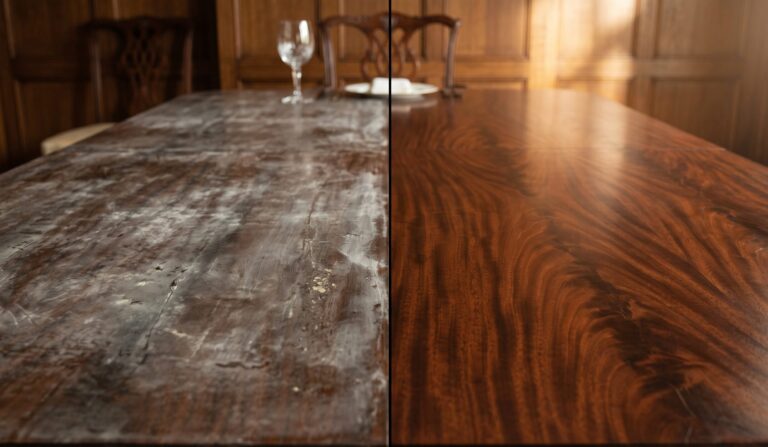
You thought you were protecting your grandmother’s antique dining table by polishing it every Sunday. Now? It catches every speck of dust. If you need to remove wax build up from wood safely, you are in exactly the right place. Decades of heavy paste waxes and silicone sprays create a hard, dull shell. Stripping that shell without destroying the delicate historical varnish underneath requires precision, the right solvents, and a gentle touch.
Quick Answer: The Bottom Line on Wax Removal
To safely strip away cloudy, sticky wax without damaging the underlying varnish, use white spirit (mineral spirits). Dampen an ultra-fine pad of 0000 steel wool, gently rub in the direction of the wood grain, and wipe the dissolved sludge away immediately with a lint-free microfiber cloth. Never use pure acetone or harsh abrasives.
Identifying the Problem: Is it Wax, Silicone, or a Failing Finish?
Before throwing chemicals at your vintage credenza, you must diagnose the exact surface issue. A misdiagnosis can turn a simple thirty-minute cleaning job into a month-long refinishing nightmare.
The Fingernail Test for Sticky Wood Furniture
Find an inconspicuous area, like the back leg or underside of a table lip. Gently scrape the surface with your fingernail. If a soft, opaque, greasy substance gathers under your nail, you are dealing with traditional paste wax or a heavy silicone polish build-up. If the surface is rock hard but cloudy, the finish itself may be deteriorating.
Wax vs. Silicone Build-Up
Traditional carnauba and beeswax create a beautiful patina, but layering them repeatedly traps dirt, resulting in dull hardwood floors and muted grain. Aerosol dusting sprays are worse. They frequently contain silicone. Silicone creates a fast, high-gloss shine but cures into a stubborn, sticky film that rejects future oils and makes antique wood restoration incredibly frustrating.
When the Finish Itself is Failing
Sometimes a white haze on a wood table is not wax at all. If a hot mug or a damp vase was left on a shellac or nitrocellulose lacquer surface, moisture becomes trapped beneath the clear coat. This is called ‘blushing’. Stripping the wax will not fix blushing; you will need to re-amalgamate the finish.
The Best Solvents to Remove Wax Build Up from Wood
Selecting the correct solvent is the critical barrier between reviving a beautiful polyurethane finish and melting it off entirely.
| Solvent / Cleaner | Effectiveness | Safety on Vintage Finishes | Best Use Case |
|---|---|---|---|
| White Spirit (Mineral Spirits) | Very High | Excellent | General wax and grime removal on 95% of antiques. |
| Naphtha (Lighter Fluid) | High | Excellent | Delicate veneers requiring fast evaporation. |
| Commercial Wax Remover | High | Good | Heavy floor wax build-up. |
| Vinegar & Water Solution | Low | Poor (Acidic) | Light kitchen grease, avoiding heavy antique wax. |
White Spirit (Mineral Spirits): The Industry Standard
In the UK, white spirit is the restorer’s best friend. It is an aliphatic hydrocarbon that effortlessly dissolves traditional beeswax, carnauba, and oily grime. Most importantly, it will not soften or melt cured varnishes, polyurethane, or a delicate French polish / shellac. Always wear [Nitrile Gloves] when handling it.
Naphtha: The Fast-Evaporating Alternative
If you are working with extremely thin veneer where you want to minimise the time liquids sit on the timber, Naphtha is brilliant. It flashes off (evaporates) much faster than white spirit. However, it is highly flammable and emits stronger fumes. Proper ventilation is non-negotiable.
White Vinegar and Water Solution: The Natural Route
Can you use a white vinegar and water solution? Yes, but with strict caveats. Vinegar is mildly acidic. While it cuts through topical grease, it struggles against decades of hardened, layered floor wax. Furthermore, introducing water to vintage, cracked timber is incredibly risky, as it raises the wood grain and can warp veneer vs. solid wood panels.
Step-by-Step: How to Remove Wax Build Up from Wood Furniture
Gather your materials. You will need high-quality solvent, [Liberon 0000 Wire Wool], a stack of clean rags, and an old toothbrush for the carvings.
Step 1: Surface Preparation and Safety
Move the piece to a well-ventilated garage or open a window. Lay down dust sheets. Lightly dust the furniture with a dry cloth to remove loose debris so you don’t grind dirt into the finish.
Step 2: The Solvent Application
Never pour solvent directly onto the timber. Instead, pour a small amount of white spirit into a glass jar. Dip a pad of 0000 steel wool into the jar, squeezing out the excess. You want it damp, not dripping.
Step 3: Agitating the Wax (The 0000 Steel Wool Technique)
Gently rub the damp wire wool over the cloudy wood finish, strictly following the direction of the wood grain. Do not scrub in circles. The solvent will chemically dissolve the wax, while the ultra-fine wire wool provides just enough mechanical agitation to lift it out of the grain without scratching the clear coat beneath.
Step 4: Wiping and Neutralising
Work in small sections (roughly 30cm by 30cm). Before the solvent evaporates, use a fresh, lint-free microfiber cloth to wipe away the grey, sludgy residue. If you wait too long, the wax will simply harden back onto the surface. Repeat this process until the wire wool glides smoothly and the cloth comes away clean.
What NOT to Do: Common Mistakes That Ruin Wood Finishes
Impatience destroys antiques. Avoid these catastrophic shortcuts.
Avoid Abrasive Sponges and Coarse Sandpaper
Using a green kitchen scouring pad or harsh sandpaper will aggressively gouge the clear coat. You will be left with a dull, heavily scratched surface that requires a total strip and refinish.
Why You Shouldn’t Use Pure Acetone or Cellulose Thinners
Acetone, lacquer thinner, and cellulose thinners are “hot” solvents. They are designed to dissolve paint and varnish. Wiping an antique table with acetone will instantly melt the original finish right down to the bare timber. For a deeper understanding of chemical conservation, the Institute of Conservation (Icon) offers brilliant resources on preserving historic surfaces.
Skipping the Test Patch
Always test your chosen solvent on a hidden area first. Apply it, agitate gently, and wipe. If the rag pulls up the brown tint of the actual wood stain rather than just grey dirt and wax, stop immediately. You are dealing with an incredibly fragile, unsealed finish. You may need to read our guide on identifying vintage wood finishes before proceeding.
After the Clean: Restoring and Protecting Your Wood
Once the old wax is gone, the wood will likely look slightly matte and “thirsty.”
Evaluating the Bare Finish
Assess what is left. If the underlying lacquer is intact, the wood will boast a clean, flat sheen. If the piece looks incredibly dull or the stain is patchy, the old wax may have been hiding a deeply compromised clear coat that now requires a fresh coat of oil or polyurethane.
Choosing the Right Protection Moving Forward
Do not go back to aerosol silicone sprays. To nourish and protect the timber, apply a microscopic layer of a high-quality microcrystalline wax, such as [Renaissance Wax]. Apply it sparingly, buff it to a hard shine, and then leave it alone. A good wax job should last a year; daily dusting should only require a dry microfiber cloth.
People Also Ask (PAA)
Can I use Fairy Liquid to remove wax from wood?
Fairy Liquid (or standard dish soap) is an excellent degreaser, but it is not ideal for heavy wax. Removing wax with dish soap requires water, and soaking vintage wood in soapy water is a recipe for swelling the grain and delaminating old glues. Stick to spirit-based solvents.
Will vinegar ruin wood furniture?
Straight vinegar is highly acidic and can slowly etch or eat through delicate finishes like shellac over time. If you must use it, always dilute it heavily with water (a 10:1 ratio), use it sparingly with a damp cloth, and dry the surface immediately.
How do you get sticky residue off antique wood?
To safely dissolve sticky residue on antiques, dampen a soft cloth with Naphtha or white spirit. Gently hold the cloth over the sticky area for ten seconds to soften the adhesive or silicone, then wipe it away. According to the Victoria and Albert Museum Conservation Department, introducing minimal solvent and avoiding heavy friction is key to preserving original patinas.
Final Thoughts on Revealing the Grain
Choosing to remove wax build up from wood is the most rewarding maintenance task you can perform on vintage furniture. By ditching the silicone sprays, utilising white spirit, and showing patience with 0000 wire wool, you strip away decades of murky history to reveal the stunning, authentic timber beneath. Have a sticky, clouded table in your dining room? Grab your gloves, open a window, and start testing your solvents today.