
As an Amazon Associate, we earn from qualifying purchases. This means we may receive a small commission at no extra cost to you if you buy through our links. All recommended products are available on Amazon UK.
The Ultimate Guide to Wood Conservation Epoxy in the UK: Saving Rotten Timber
You’ve just poked a screwdriver right through the bottom of your original Victorian sash window sill. The timber is spongy, wet, and ruined. Ripping out historical joinery is heartbreaking—and wildly expensive. The professional alternative? The Wood Conservation Epoxy UK restoration experts rely on. This isn’t cheap hardware-store filler. It is a highly engineered structural rescue mission for your timber.
Quick Answer: The Bottom Line on Timber Restoration
Wood conservation epoxy is a specialised two-part resin system used to permanently rebuild rotten timber without removing the original wood frame. You first brush a liquid epoxy wood consolidant into the porous, decaying fibres to solidify them. Next, you sculpt the missing profile using a flexible wood resin putty. Leading UK-approved systems include Repair Care, Timbabuild, and West System.
What is Wood Conservation Epoxy? (And Why Standard Fillers Fail)
There is a massive chemical difference between structural conservation and merely patching a hole. Understanding this dictates whether your repair lasts fifty years or fails in five.
The Anatomy of Standard Polyester Fillers (The Problem)
Most DIYers reach for a standard two-part car body filler. This is a fatal error. In the polyester filler vs epoxy debate, polyester loses entirely for exterior wood. UK weather guarantees that timber will swell in winter and shrink in summer. Polyester cures into a brittle, rigid lump. When the wood moves, the polyester snaps, opening hairline cracks that trap rainwater and accelerate the rot.
How Liquid Epoxy Consolidants Work (The Solution)
Professional restoration demands a two-stage approach. Before any filler is applied, you must use a low-viscosity epoxy resin primer. Through capillary action, this watery liquid travels deep into the damaged timber. It performs true spongy wood consolidation, curing inside the cellular structure of the timber. You are essentially turning wet rot into a solid, reinforced plastic matrix that permanently bonds with the natural wood fibres.
The Best Wood Conservation Epoxy UK Systems
Not all resins are engineered for the same environment. Here is how the top UK epoxy resin suppliers stack up for specific restoration tasks.
| Brand & System | Flexibility | Cure Time | Best Use Case |
|---|---|---|---|
| Repair Care Dry Flex | Extreme | 1 – 16 Hours (Varies by grade) | Exterior joinery, sash windows, doors |
| Timbabuild ERC | High | 4 Hours | Cost-effective professional joinery repair |
| West System 105 | Moderate/Rigid | 24 Hours | Marine ply, boat building, structural laminating |
| Rotafix | Rigid | 24 – 48 Hours | Heavy timber framing, heritage oak beams |
Repair Care & Timbabuild (The Joinery Specialists)
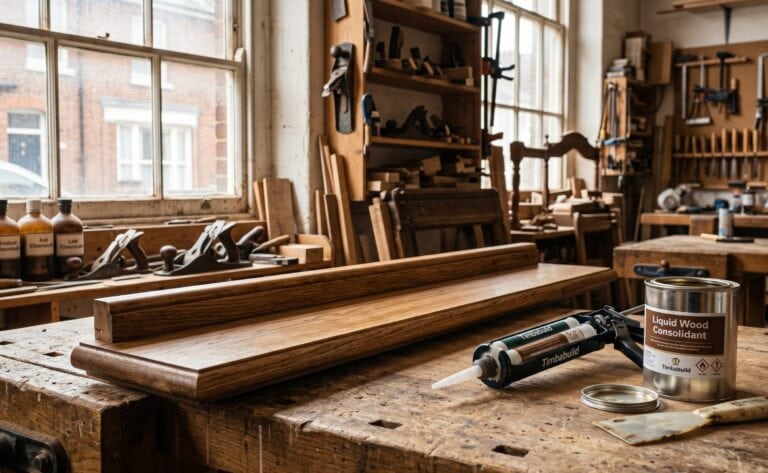
If you are tackling sash window sill repair or exterior doors, you need movement accommodation. Both [Repair Care Dry Flex 4] and Timbabuild epoxy are extruded from dual-cartridge guns, guaranteeing a perfect mixing ratio. They cure into a highly flexible wood resin that moves in perfect tandem with UK softwoods.
West System Epoxy UK (The Structural & Marine Workhorse)
For severe water exposure or load-bearing applications, West System epoxy UK remains the gold standard. Using their 105 resin base combined with microfibres, you can rebuild shattered structural elements or execute flawless marine ply epoxy repair on boat hulls. It cures harder than the wood itself.
Rotafix (For Heavy Timber and Heritage Beams)
When restoring a 16th-century barn, you need scale. Rotafix structural timber repair systems utilise pourable epoxies and carbon fibre rods to save massive, load-bearing oak beams without having to dismantle the roof structure.
Step-by-Step: How to Restore Rotten Wood with Epoxy
Execution is everything. Rushing the preparation will guarantee a failed bond.
Step 1: Excavation and Moisture Testing
Use a router or chisel to excavate the “frass” (the dead, crumbly wood) until you hit bright, sound timber. Crucially, you must test the area with a [Wood Moisture Content Meter]. Epoxy and water repel each other. The timber must register below 18% moisture content. If it is wetter, you must tent the area and use a heat gun on a low setting to dry the core.
Step 2: Applying the Liquid Epoxy Consolidant
Once dry, mix your primer (like [Timbabuild EWS]). Brush it liberally into the excavated cavity. Allow the wood to drink it in. Keep applying until the timber refuses to absorb any more liquid. Allow this to become tacky (usually 20–40 minutes) before proceeding. This is the cornerstone of rotten timber restoration.
Step 3: Shaping the Two-Part Epoxy Wood Filler
Extrude your two-part epoxy wood filler onto a mixing board. Mix it thoroughly with a plastic spatula until the colour is 100% uniform—streaks mean unmixed hardener, which will never cure. Press the putty firmly into the cavity, pushing hard to expel any trapped air. Use clear Perspex strips coated in release agent to rebuild sharp window sill edges perfectly flat.
Step 4: Curing, Sanding, and Finishing
Allow the resin to fully cure according to the manufacturer’s UK climate guidelines (temperature directly dictates cure speed). Once hard, you can sand, plane, and rout it exactly like natural timber. Always finish the repair with a high-quality microporous paint system to allow the surrounding wood to breathe.
Heritage and Listed Building Considerations in the UK
You cannot simply inject plastic into Grade II listed buildings without understanding conservation law.
The Ethics of Resin Repair
The core philosophy of heritage wood conservation in the UK is “minimum intervention.” The goal is to retain as much original historical fabric as possible. When executing listed building timber repair or fixing severe woodworm damage repair, epoxy allows you to save 90% of a 200-year-old beam, whereas traditional carpentry would require amputating the entire end.
When to Splice vs. When to Use Epoxy
Guidelines from Historic England generally support resin for weather-facing joinery (like window sills). However, for primary structural load-bearing joints, traditional carpentry is often preferred. You can read our deep-dive on structural timber splicing techniques to determine the best approach for your property.
People Also Ask (PAA)
How long does wood epoxy last?
When applied correctly to dry, sound timber, a professional epoxy repair will physically outlast the surrounding wood. Premium UK systems like Repair Care officially guarantee their repairs for 10 years, but in reality, a properly painted epoxy repair lasts indefinitely because it is entirely impervious to rot.
Can you screw or nail into epoxy wood filler?
Yes. High-quality Wood Conservation Epoxy handles exactly like real wood once fully cured. You can plane it, sand it, route it, and confidently drive heavy screws or nails into it. Unlike cheap polyester fillers, it will not shatter or crack under mechanical stress.
Does epoxy stop dry rot from spreading?
No, it does not. Epoxy physically consolidates the damaged area, but it is not a fungicide. You must completely eliminate the source of the dampness and treat the surrounding sound timber with a dedicated wet rot treatment or dry rot fluid before applying your epoxy primer. The Society for the Protection of Ancient Buildings (SPAB) mandates addressing the moisture source before any chemical intervention.
Final Thoughts on Timber Preservation
Replacing bespoke UK joinery costs thousands of pounds. By mastering Wood Conservation Epoxy UK techniques, you can execute invisible, permanent repairs that honour the history of the building. Ditch the car body filler, respect the moisture content, and rely on professional two-part systems. Are you currently battling rot in a period property? Check out our complete guide on treating active woodworm infestations to ensure the insects don’t eat your freshly repaired timber.