
Affiliate Disclosure: As an Amazon Associate, we earn from qualifying purchases. All products recommended in this article are available on Amazon UK, and we may earn a small commission if you buy through our links, at no extra cost to you.
The Ultimate Guide to Brass Aging Solutions for Furniture Hardware
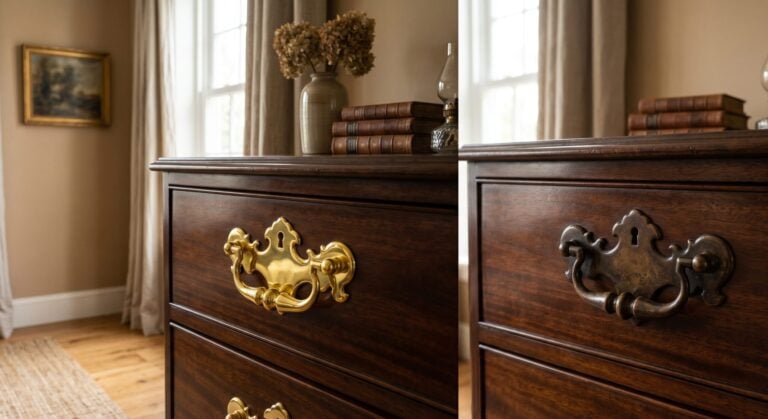
Nothing ruins the character of a beautifully restored Victorian chest of drawers quite like aggressively shiny, cheap-looking hardware. If you want an authentic, tarnished aesthetic without hunting down matching antiques, you need a reliable brass aging solution for furniture. Forcing oxidation onto metal isn’t magic; it is a precise chemical reaction. You can absolutely achieve a rich, historical patina at home, provided you understand how to strip, treat, and seal the alloy correctly.
Quick Answer: The Most Effective Way to Age Brass
The fastest and most reliable method to age brass furniture hardware is to strip the factory lacquer with a chemical solvent, scrub the metal to degrease it, and submerge the pieces in a commercial liquid brass darkener. The oxidation reaction takes just 1 to 3 minutes and must be stopped immediately in a neutralising bath of baking soda and water to prevent the acid from destroying the metal.
Understanding Brass Patina: Why Force Oxidation?
Brass is an alloy of copper and zinc. Left alone, it reacts with oxygen and ambient moisture, developing a dull, earthy crust. We call this a patina. When we restore wooden pieces, the hardware needs to match the age of the timber. You cannot put gleaming, factory-fresh cabinet hinges and knobs on a 1920s mahogany tally desk. It looks entirely wrong.
By artificially forcing oxidation, we bypass decades of waiting. We create an artificial antique brass finish that elevates the entire piece, grounding it in its proper historical context.
The Critical First Step: Preparing Your Hardware
Preparation dictates your success. If you skip these steps, your chosen brass aging solution for furniture will fail entirely, leaving you with splotchy, uneven drawer pulls.
The Magnet Test: Solid Brass vs. Brass-Plated
You can only chemically age real brass. Take a standard fridge magnet and hold it to your hardware. If the magnet sticks, the piece is steel or iron that has merely been brass-plated. If the magnet does not stick, you have solid brass. Aggressively aging plated hardware often eats right through the microscopic brass layer, exposing the grey steel beneath.
The Lacquer Test: Is Your Brass Coated?
Modern hardware is coated in a clear industrial lacquer to prevent tarnishing. Chemicals cannot penetrate this plastic shell. Scratch the back of the backplate with a pin. If a clear flake lifts off, the piece is sealed. You must remove it.
How to Strip Lacquer from Brass and Degrease Safely
Stripping lacquer from brass requires a heavy-duty solvent. Submerge the hardware in Rustins Strypit Paint and Varnish Stripper for 30 minutes. Once the clear coat bubbles, scrub it away with 0000 Grade Wire Wool. Finally, wash the hardware in hot, soapy water. From this point forward, handle the brass only with gloves. The natural oils from your fingers act as a barrier, preventing the brass darkening solution from taking hold.
Top Commercial Brass Aging Solutions for Furniture
Commercial solutions are predictable, fast, and ideal for restoring vintage furniture hardware. Here are the top performers in the UK market.
Liquid Brass Darkeners
Liquid agers are acidic compounds containing selenium dioxide. They work instantly. A quick dip yields a deep, dark brown brass oxidation that mimics a century of grime and handling. We highly recommend Liberon Brass Ager for consistent, professional results.
Liver of Sulfur Gel
Liver of sulfur is a classic jeweller’s compound. It provides a multi-tonal, iridescent patina that shifts from gold to magenta to charcoal grey depending on how long you leave it. Liver of Sulphur XL Gel is excellent because it has a longer shelf life than the dry lump form.
Commercial Solutions Comparison
| Product Type | Average Cost (UK) | Reaction Time | Final Aesthetic |
|---|---|---|---|
| Liquid Brass Ager | £12 – £18 | 1 – 3 Minutes | Dark Brown / Oil-Rubbed Bronze Look |
| Liver of Sulfur Gel | £15 – £22 | 5 – 10 Minutes | Multi-tonal / Charcoal / Iridescent |
DIY & Household Brass Aging Methods
If you prefer a chemical-free approach, everyday pantry items can alter copper alloys, though the results take significantly longer.
The Ammonia Vapour Fuming Technique
Ammonia vapour creates a rich, earthy brown patina. Never submerge the brass directly into ammonia. Instead, place your antique drawer pulls on a wire rack inside a sealed plastic tub. Pour a shallow pool of household ammonia into the bottom of the tub. Seal the lid. The fumes will react with the metal over 24 to 48 hours.
The Salt and Vinegar Method (For Verdigris)
To achieve a crusty green/blue verdigris patina, mix glacial acetic acid (white vinegar) and table salt into a paste. Paint this directly onto the brass. The salt acts as an abrasive while the acid eats the copper. Leave it in a damp environment for several days.
Step-by-Step: How to Apply a Brass Aging Solution for Furniture
Ready to tarnish your hardware? Here is the exact methodology for applying a liquid brass ager safely and effectively.
1. Safety Gear and Workspace Setup
Work in a highly ventilated area, ideally outdoors. Wear nitrile gloves and safety goggles. Lay down a plastic dust sheet to protect your workbench.
2. The Dipping Method vs. The Brushing Method
For uniform colour, pour the solution into a plastic tub and use the dipping method, submerging the hardware entirely for 60 seconds. For a distressed, weathered look, use a small synthetic brush to dab the solution only into the recesses and details of the hardware, wiping the high points clean with a rag.
3. Stopping the Chemical Reaction
This is non-negotiable. Once the desired colour is reached, immediately drop the hardware into a bath of water and baking soda. Neutralising with baking soda stops the acid dead in its tracks. If you skip this, the chemical will continue to eat the zinc, eventually turning the brass a powdery, brittle pink.
Sealing and Protecting Your New Antique Finish
Unsealed patina is fragile. It will rub off on your hands and continue to change colour over time. You must lock the finish in.
Using Paste Wax for a Natural Feel
For a beautiful, matte finish that feels wonderful to the touch, apply a thin coat of Renaissance Micro-Crystalline Wax Polish. Buff it out with a clean cotton rag. This is perfect for upcycling dresser handles that see moderate daily use.
Applying Clear Coat Lacquer
For high-traffic items, such as the handles on a heavily used kitchen cabinet, wax isn’t tough enough. Spray a matte clear coat lacquer over the fully dried hardware to provide a hard, durable shell.
Troubleshooting Common Brass Aging Problems
Things occasionally go wrong. Here is how to fix the most common issues.
Why Didn’t My Brass Change Colour?
Your hardware is still coated in lacquer, or it isn’t actually brass. Re-test with a magnet. If it is solid brass, you need to strip it again. Even microscopic specs of leftover clear coat will repel the chemicals.
How to Fix a Splotchy or Flaking Patina
Splotchy results mean the brass was poorly degreased. Fingerprints or residual polishing oils blocked the acid. You must scrub the piece down with fine wire wool and acetone, then reapply the darkening solution.
People Also Ask (PAA)
Does vinegar and salt turn brass green?
Yes. The acetic acid in vinegar combined with the sodium chloride in salt accelerates copper oxidation, creating a green/blue crust known as verdigris. This process usually takes 2 to 5 days of exposure.
How long does it take to artificially age brass?
Using a commercial liquid brass ager, tarnishing brass quickly takes between 1 and 3 minutes. Household methods, like ammonia fumes or salt and vinegar, take anywhere from 24 hours to several days.
Can you age brass-plated hardware without ruining it?
It is very risky. Brass plating is exceptionally thin. Liquid agers often eat through the plating before a nice patina forms, exposing the steel beneath. If you must try, dilute the ager heavily with water and monitor it by the second.
Will aged brass rub off on your hands?
Yes, unsealed patina will leave a dark, sooty residue on your hands. You must seal the aged hardware with either a micro-crystalline paste wax or a clear matte lacquer to fix the finish.